Table of contents
How was the poppet valve assembly machine developed at STAUFF?
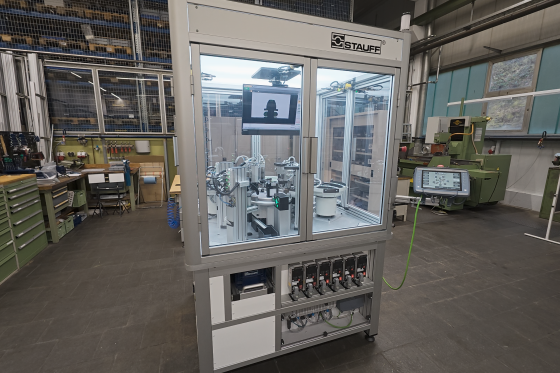
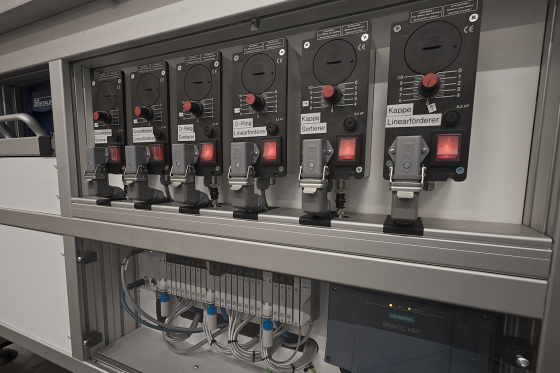
The poppet valve assembly machine was created as a targeted new internal development in order to secure a central assembly step in the largely automated production of test couplings in the long term and make it fit for the future. Instead of relying on an external solution, STAUFF made a conscious decision to develop and build the system in-house - supported by the mechanical engineering expertise of its own toolmaking department at the Meinerzhagen site and in close cooperation with specialist departments such as Assembly and Industrial Engineering.
This project was not just a replacement for existing technology, but a pilot for internal special machine construction across all sites. The aim was to create an assembly solution that was a perfect fit for the company's own processes and was developed on the basis of real day-to-day production.
Why a new assembly solution was necessary
The assembly of valve plugs for test couplings from the STAUFF Test series is an integral part of internal production and therefore a critical process step. The system previously used had been in operation for many years and had increasingly reached its limits. For STAUFF, the question therefore arose not only of a replacement, but of the best possible solution for its own requirements.
As the company already had extensive in-house experience in machine and plant construction, Meinerzhagen toolmaking was considered as a possible implementation option at an early stage. In the evaluation, the internal approach impressed with its in-depth understanding of the process and the ability to consistently design the system to meet the actual assembly requirements.
From everyday assembly to machine solution: development from practice
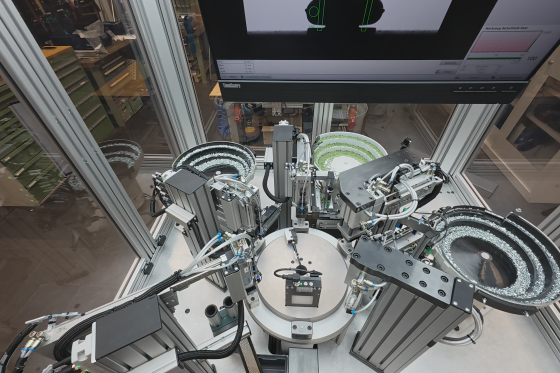
A key feature of the poppet valve assembly machine is its proximity to everyday assembly work. Employees' experiences were systematically incorporated right from the early project phase. Feedback from day-to-day work, known weak points in existing processes and requirements for operation and maintenance formed the basis for the design of the system.
This close integration of practice and design meant that the system was not developed "for assembly", but from assembly. Many of the detailed decisions were based on how the system would actually be used later on. The result is an assembly solution that supports the process instead of dictating it.
Toolmaking department Meinerzhagen as an internal mechanical engineering partner
Toolmaking Department Meinerzhagen took on the role of an internal machine supplier in this project. As a competence centre for modular assembly lines, the team there develops, builds, maintains and optimises systems for manual, semi-automated and fully automated processes relating to the assembly of quick-release couplings. In addition to assembly steps, the range of services also includes process-related functions such as testing and labelling.
This broad expertise made it possible to take a holistic approach to the poppet valve assembly machine. Design, construction and subsequent optimisation were considered together from the outset. At the same time, the entire process and machine expertise remained within the company - a significant advantage for the long-term further development of the system.
Collaboration across locations as a success factor
The poppet valve assembly machine is the result of close collaboration across locations. Industrial Engineering structured the project and created the basis for decision-making. Assembly acted as an internal customer and clearly stated its requirements. Mould making implemented these requirements as the executing partner.
This clear division of roles, combined with short coordination paths and mutual understanding, was a decisive success factor. Instead of traditional supplier-customer relationships, a common understanding of the project emerged with a clear goal: a viable, practical assembly solution.
What this project shows about STAUFF's mechanical engineering expertise
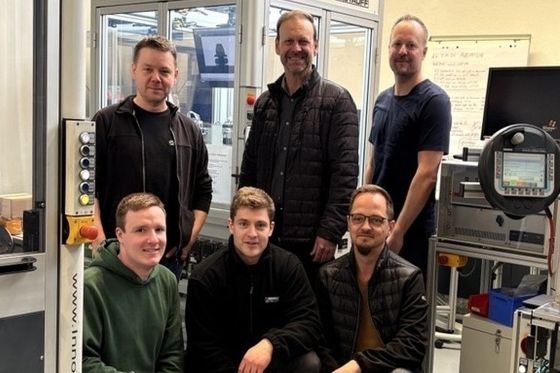
The poppet valve assembly machine is an example of STAUFF's internal mechanical engineering expertise. It shows that the company is not only able to operate its own assembly processes, but also to actively develop and automate them.
The added value of internal solutions is particularly clear: Expertise remains within the company, systems are tailored precisely to the company's own processes and further developments can be initiated at any time under the company's own steam. The poppet valve assembly machine is therefore not only a successful individual system, but also a blueprint for future automation projects.
FAQs
Why was the poppet valve assembly machine developed in-house?
Because STAUFF has the necessary mechanical engineering and process expertise and internal teams know their own assembly processes particularly well. This made it possible to create a solution that is precisely tailored to the needs of production.
What role did the toolmaking departmet Meinerzhagen play?
The toolmaking department Meinerzhagen developed and realised the automatic assembly machine as an internal mechanical engineering partner. Its experience with modular QRC assembly lines was decisive for the successful realisation.
What made this project special?
It was a cross-location pilot project in which assembly, industrial engineering and toolmaking worked together in this form for the first time.
How was everyday assembly taken into account?
Through the early and systematic integration of feedback from assembly. This flowed directly into the layout and design of the system.
What significance does the project have for future projects?
Thepoppet valve assembly machine serves as a reference for other internal mechanical engineering projects and shows the potential that lies in the early integration of internal expertise.

Newsletter subscription
Subscribe now and don't miss any new articles!